SW
Shaokun Wu
Listerine Cool Mint (Chinese Text)
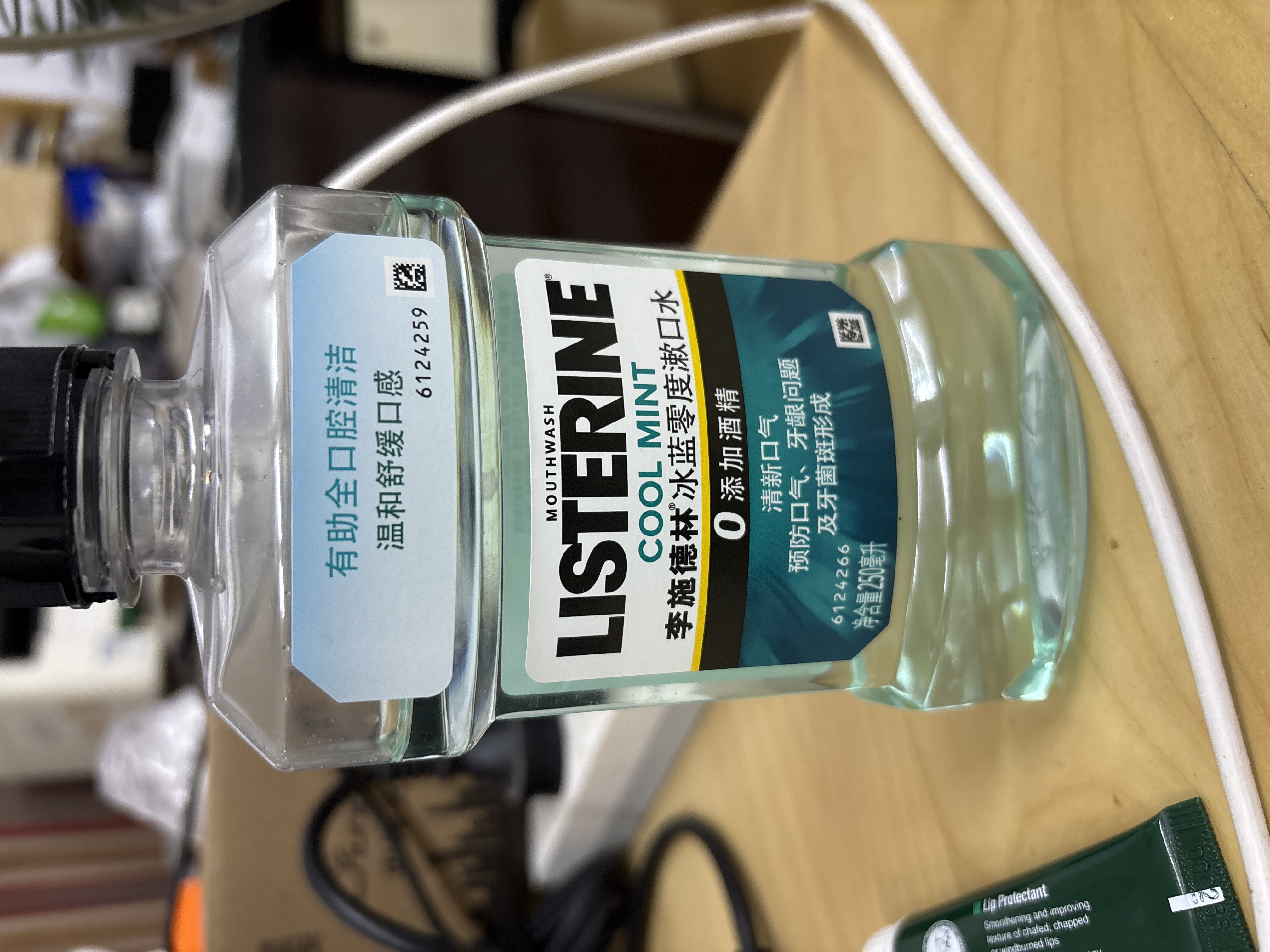
One finds oneself, quite unexpectedly, confronted by a small bottle of greenish liquid, a substance known to humanity as Listerine. A mouthwash, they call it. This particular iteration, it proclaims, is “Cool Mint.” One is often left to ponder: what, precisely, is "cool mint" in the grand cosmic scheme of things? Is it a sensation, a flavor, a mere marketing construct designed to lull us into a fleeting sense of… freshness?
Here, in this miniature vessel, we observe what appears to be a globalized phenomenon. The script, at once familiar and alien, whispers of a cultural transference. “李施德林冰蓝零度漱口水” – Listerine Cool Mint Zero Alcohol Mouthwash. Zero alcohol. An interesting choice, a concession perhaps to sensibilities, or merely a clever stratagem to expand its dominion. It promises a "whole mouth clean" and a "mild, soothing taste." And yet, beneath this veneer of soothing mildness, one must question the true nature of this chemical ballet performed within the human oral cavity.
It is said to "freshen breath," to "prevent bad breath, gum problems, and plaque formation." Such are the aspirations of human hygiene, the desperate struggle against the microbial wilderness that flourishes within. A tiny barcode, a digital scar, an alphanumeric sequence: 6124259, 6124266. Numbers, silent and unyielding, dictating the passage of this small green elixir through the arteries of commerce. 250 milliliters. A modest quantity, a daily ritual perhaps, swallowed by the ceaseless demands of modern existence.
And beside it, a small green tube, "Lip Protectant." A balm against the harsh realities of the world, against the chapping winds and the sun's indifferent gaze. The constant human endeavor to maintain, to preserve, to shield oneself from the inevitable decay. A poignant tableau, this small domestic scene. The ephemeral quest for freshness and protection, played out against the backdrop of an otherwise anonymous existence. One is left to wonder: do the inhabitants of this distant, chaotic land truly find solace in this industrial mint, or is it merely another ephemeral distraction in the relentless march towards an uncertain future?
Alcohol-Free Listerine in East Asia
You're looking at a product that's very common around the world, but this particular version has a detail that stands out to someone used to Western products: the emphasis on being alcohol-free. While Listerine's "Cool Mint" flavor is universally recognized, here in East Asia, you'll often find prominent labeling highlighting the "0% Alcohol" content.
This isn't just about a preference; it reflects a broader cultural and consumer trend. Many people, particularly in Asian markets, prefer oral hygiene products without alcohol due to perceived drying effects, discomfort, or simply a preference for natural ingredients. The specific Chinese characters on the main label, "0 添加酒精," literally translate to "0 Added Alcohol," reinforcing this key selling point.
Let's break down some of the other Chinese text you see. The blue label at the top says "有助全口腔清洁," which means "Helps with whole mouth cleaning," and below that, "温和舒缓口感," or "Mild and soothing taste." On the main label, under "Cool Mint," you see "李施德林冰蓝零度漱口水." "李施德林" is the phonetic translation of "Listerine," and "冰蓝零度漱口水" literally means "Ice Blue Zero-Degree Mouthwash," which is how this specific variant is named. Further down, after the "0 Added Alcohol" claim, the text "清新口气" means "Fresh breath," and "预防口气、牙龈问题及牙菌斑形成" translates to "Prevents bad breath, gum problems, and plaque formation." Finally, at the bottom, "净含量250毫升" indicates the net content is 250 milliliters.
This shows how global brands adapt their messaging to resonate with local consumer preferences, even for something as universally understood as mouthwash.
Listerine Cool Mint (Zero Alcohol, Chinese Market)
This is a bottle of Listerine Cool Mint mouthwash. While Listerine is a globally recognized brand, this particular bottle offers a few interesting details likely tailored for a specific market.
The Chinese characters on the label indicate that this product is sold in a Chinese-speaking region. The larger characters above "LISTERINE COOL MINT" read "李施德林 冰蓝零度漱口水" (Lǐ Shī Délín Bīng Lán Líng Dù Shù Kǒu Shuǐ), which translates to "Listerine Ice Blue Zero-Degree Mouthwash," indicating the "Cool Mint" flavor and possibly a "zero alcohol" formulation.
Below the main brand name, the prominent "添加酒精" (Tiān Jiā Jiǔ Jīng) with a crossed-out symbol clearly states "0 added alcohol," which is a common variant of mouthwash catering to various consumer preferences or local regulations.
The smaller Chinese text further down describes the product's benefits:
* "清新口气" (Qīng Xīn Kǒu Qì): Freshens breath
* "预防口气、牙龈问题 及牙菌斑形成" (Yù Fáng Kǒu Qì, Yá Yín Wèn Tí Jí Yá Jūn Bān Xíng Chéng): Prevents bad breath, gum problems, and plaque formation.
The "净含量250毫升" (Jìng Hán Liàng 250 Háo Shēng) specifies the net content as 250 milliliters. The blue label near the top, "有助全口腔清洁 温和舒缓口感" (Yǒuzhù Quán Kǒu Qiāng Qīngjié Wēnhé Shūhuǎn Kǒugǎn), translates to "Helps with whole mouth cleaning, mild and soothing taste."
This zero-alcohol version is often preferred by those who find traditional alcohol-based mouthwashes too strong or drying, or for religious and personal reasons. It highlights how major brands adapt their products and labeling to suit local markets and consumer demands.
No location data available for this discovery.