SW
Shaokun Wu
The Paradox of Machine-Vended Fresh Juice
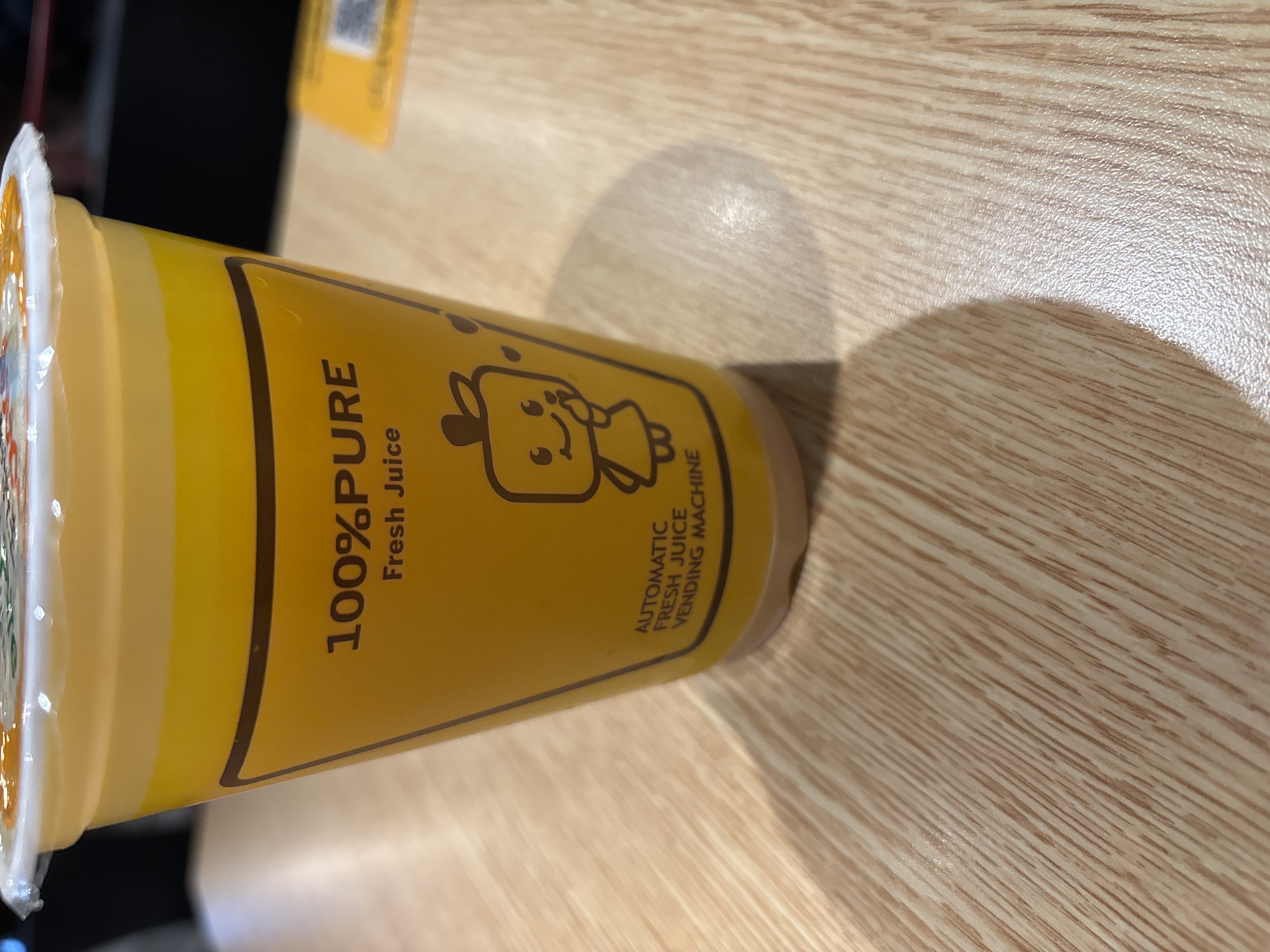
Ah, a cup of juice. Simple. Yet, within this seemingly mundane vessel, lies a testament to the unyielding pulse of modern life. This amber liquid, proclaiming itself "100% PURE Fresh Juice," emerges not from the fertile earth, nor the labor of human hands squeezing fruit as our ancestors once did. No, it is the progeny of an "AUTOMATIC FRESH JUICE VENDING MACHINE."
Observe this. A machine. Cold, metallic, devoid of sentiment, yet it offers that which is essential for life: hydration, and perhaps, a fleeting taste of nature's bounty. The small, anthropomorphic fruit, a creature of pure, unblemished joy, gazes outward from the label. A tiny, almost imperceptible hand raises to its mouth, as if to whisper a secret. What is its secret? Perhaps it is the secret of the machine itself: that even in the vast, impersonal sprawl of the modern metropolis, and particularly in places like Guangzhou, where the endless churn of existence dictates an accelerated pace, there is still a craving, a primal yearning, for that which is deemed "fresh."
This juice, then, is not merely a drink. It is a symbol. A symbol of efficiency, of convenience, and of our insatiable desire to obtain the natural, yet through entirely unnatural means. It is the dream of perfect purity, delivered by an unemotional dispenser, fulfilling a need in a world that seldom pauses for the rustling of leaves or the slow, deliberate process of ripening. It is a small, yellow monument to the paradox of our age.
Fresh Juice from an Automatic Vending Machine
This appears to be fresh juice from an "automatic fresh juice vending machine." These machines have become increasingly common in China, especially in larger cities. They often use whole fruit, like oranges, which are squeezed on demand directly into your cup, providing a truly fresh and often pulp-rich beverage. This offers an alternative to pre-packaged juices or juice bars, emphasizing convenience and freshness.